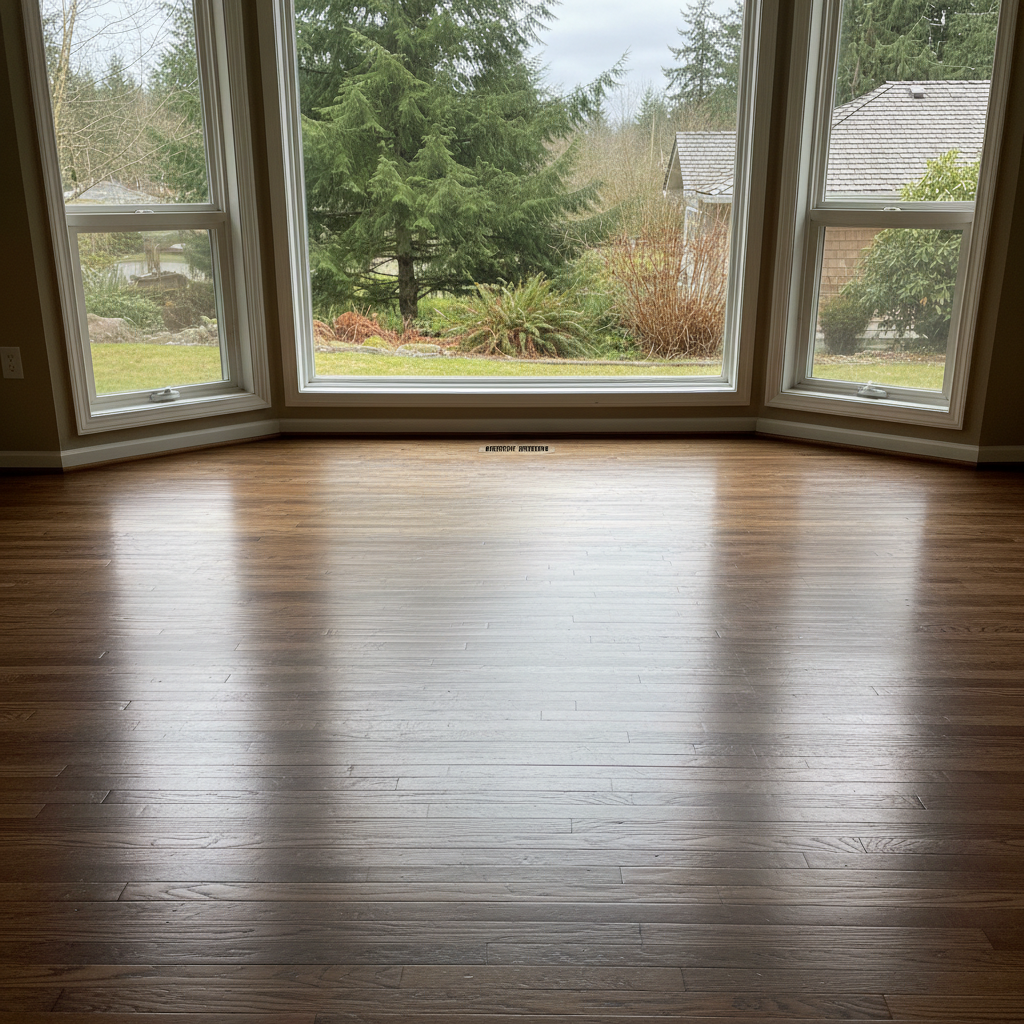
Water on hardwood floors makes a homeowner worry every single time. Here in Snohomish, WA, our damp winters and relentless autumn rain mean our homes constantly battle ambient moisture. When a pipe leaks, a refrigerator line bursts, or rain drives in through a compromised window frame, your floors take the immediate hit. If you have recently dealt with a spill or a major leak, you already know that drying things out is not as simple as running a ceiling fan for an hour. Wood is porous, and it remembers every drop.
Stone Harbor Restoration Co sees the aftermath of Pacific Northwest weather and plumbing failures all the time. Getting the boards dry is only half the battle. Keeping them that way requires a real routine.
Extending the Life of Your Restored Floors
Once the sanding, staining, and sealing are done, your hardwood floor needs a little extra care. The finish acts as your first line of defense against the damp air we get rolling off the Cascade foothills. Keep your indoor humidity steady. Stone Harbor Restoration Co tells homeowners to aim between 35% and 50% year-round. If your house gets too dry in the winter from the furnace running flat out, the wood shrinks and gaps. If it gets too humid in the spring, those boards swell up and cup.
Install decent doormats at every exterior entry. Snohomish mud and wet boots will grind grit into a fresh finish faster than anything else. Take your shoes off inside the house. It cuts down on the moisture you track across the house and saves the finish from unnecessary wear.
What Regular Maintenance Actually Looks Like
Forget what the commercials tell you about soaking your floors with soapy water. Hardwood and standing water are enemies. When you clean, use a damp microfiber mop and a cleaner made specifically for hardwood finishes. If the pad is dripping wet, you are using too much water.
Clean up spills immediately. Do not wait until after dinner. If a glass of water tips over in the kitchen, grab a towel right then. Check underneath your house plants, too. Those ceramic pots love to sweat condensation onto the wood beneath them, creating circular dark stains that sink deep into the grain.
Warning Signs of Hidden Trouble
Sometimes water damage is not obvious right away. You have to look closely at what the floor is telling you.
- Boards starting to cup or crown at the edges
- A faint musty smell near exterior walls or baseboards
- A dull, cloudy appearance in the finish that will not buff out
- Small black or dark gray spots clustering around nail holes
If your floorboards start sounding hollow when you walk across them, the subfloor or the glue bond has let go. That usually means moisture has been sitting underneath for a while.
When to Call a Professional
Surface spills you can handle. But if you walk into the kitchen and find a large puddle from a dishwasher leak, or if your hardwood has warped into a wave pattern, put down the mop and call for help. Trying to do it yourself during a major saturation event with a household box fan usually leaves moisture trapped underneath the planks. That leads straight to mold growth and rotting subfloors.
Stone Harbor Restoration Co uses specialized extraction gear and moisture meters that read deep into the wood and the subfloor beneath it. If your floors are buckling, cupping badly, or showing dark water rings that refuse to sand out, call Stone Harbor Restoration Co for Water Damage Restoration Service in Snohomish, WA. Stone Harbor Restoration Co will come out, figure out how far the water traveled, and get your floors back to looking solid without unnecessary tear-outs.